Loft Living In SoHo: What Buyers Should Know
May 21, 2026
May 21, 2026
Thinking about buying a loft in SoHo? It is easy to fall for the exposed columns, tall ceilings, and cast-iron charm. But in this part of Manhattan, the real story is not just style. It is also about legal use, building condition, ownership structure, and what you can realistically change after closing. If you are considering loft living in SoHo, here is what you should know before you make a move. Let’s dive in.
SoHo’s loft market grew out of its history as a district of post Civil War store-and-loft buildings built for merchants and manufacturers. The area’s architectural character includes cast-iron-fronted and masonry buildings in styles like Italianate, Second Empire, Queen Anne, Romanesque Revival, and Renaissance Revival. That historic fabric still shapes what buyers see today.
The SoHo-Cast Iron Historic District was designated in 1973, protecting about 500 buildings across 25 blocks, and a 2010 extension added roughly 135 more properties. Over time, many former warehouses and loft buildings were adapted into studios, galleries, and homes. As a result, SoHo inventory can include classic loft conversions, through-block buildings, and newer condo development built within a landmarked setting.
For you as a buyer, that means two apartments with a similar loft look may function very differently in practice. One may be a raw-feeling adaptive-reuse space with unusual proportions, while another may offer a more polished condo layout inside a historic streetscape. In SoHo, the details matter.
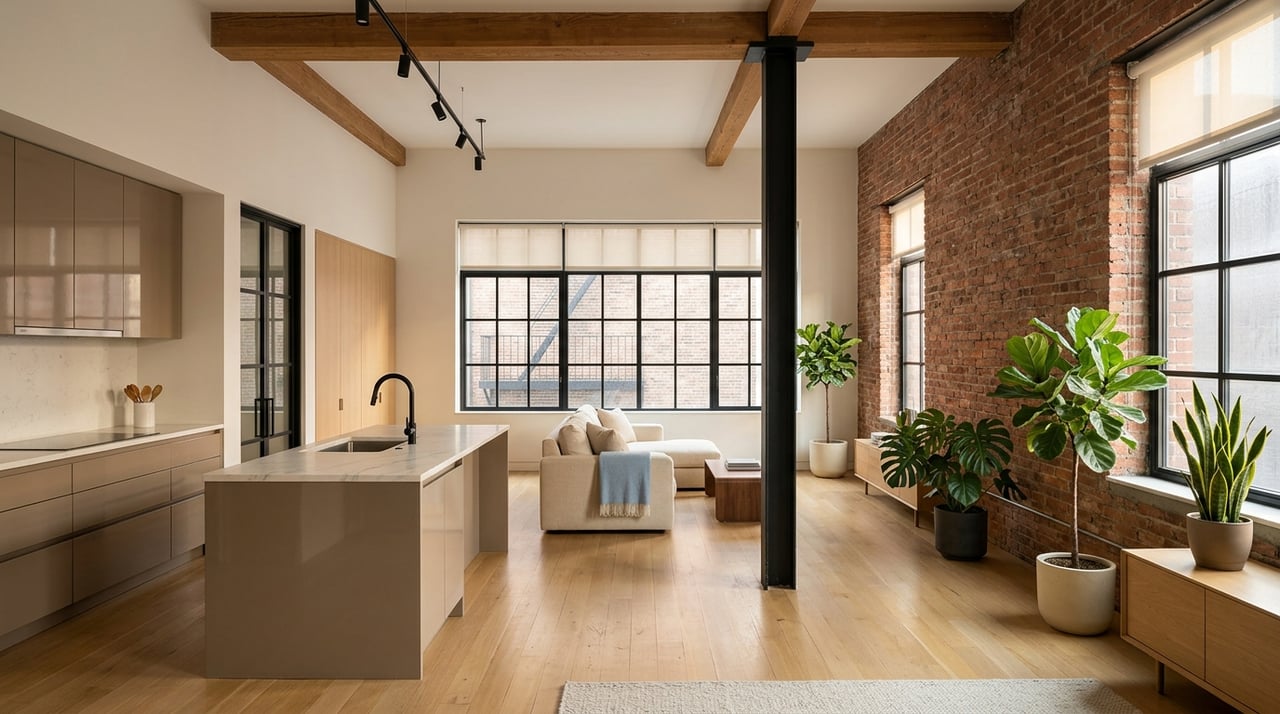
One of the biggest draws of a loft is openness. Historic lofts were originally large commercial spaces, so many homes still offer high ceilings, expansive great rooms, and flexible entertaining space. That can feel dramatic in all the right ways.
At the same time, older loft layouts may be less compartmentalized than newer apartments. Some units have deep floor plates, long sightlines, or through-block layouts that affect how natural light travels and how easily bedrooms, offices, or guest areas can be enclosed. This is why a floor plan that looks exciting online still needs careful in-person evaluation.
Privacy and storage often depend more on the exact unit than on the neighborhood or building name. In a loft, built-ins, closet systems, interior partitions, and sound separation can have an outsized impact on day-to-day comfort. If you work from home or want distinct sleeping areas, those practical elements deserve as much attention as the exposed brick and oversized windows.
In SoHo, the aesthetic can be unforgettable. Still, building and unit condition should be a major part of your decision. The New York State Attorney General advises buyers to closely examine the facade, roof, flooring, elevators, HVAC, windows, electrical wiring, and plumbing, and to read the offering plan carefully.
That guidance matters even more in older loft buildings, where expensive issues may involve facade work, roof repairs, elevator work, plumbing replacement, or electrical upgrades. Before closing, you should also test water pressure, heating and cooling performance, and any obvious sound transfer. A beautifully styled loft can still come with costly infrastructure needs.
This is one reason experienced guidance matters in SoHo. The right purchase is not simply the loft with the best photos. It is the loft where the legal, physical, and financial pieces align with your goals.
Because SoHo is landmarked, renovation plans often involve more review than buyers expect. The Landmarks Preservation Commission says owners of landmarked buildings and buildings in historic districts generally need permits for most alterations. Changes to windows and other exterior elements may trigger review even when interior work would not.
That does not mean you cannot improve a loft. It does mean you should ask early and specifically about what approvals may be required. If you are hoping to replace windows, alter exterior-facing elements, or make changes that affect the building envelope, you may face a longer path than you would in a non-landmarked building.
It is also smart to separate your wish list into two categories:
In SoHo, renovation feasibility is part of the purchase decision, not just a post-closing detail.
The ownership structure of a SoHo loft matters just as much as the architecture. In New York, buying a co-op means you are purchasing shares in a corporation tied to a specific apartment through a proprietary lease, along with monthly maintenance charges. Buying a condo means you own the unit itself plus an undivided interest in the common elements.
This distinction affects your ownership experience in meaningful ways. Two lofts with nearly identical finishes and similar addresses can come with very different financial obligations, approval processes, and resale considerations. In SoHo, where many loft buildings were converted over time, this is especially important.
As you compare options, ask questions like these:
For sponsor or conversion purchases, the Attorney General advises buyers to read the entire offering plan and consult an attorney before signing. That advice is particularly relevant in loft buildings, where history and conversion details can have long-term consequences.
This is one of the most important parts of buying in SoHo. Not every loft has the same legal status for residential occupancy, and that can directly affect what you are buying and how you can use it.
Buyers should understand whether a unit is a standard residential apartment, an interim multiple dwelling under the Loft Law, or a JLWQA unit subject to SoHo and NoHo rules. The Loft Law created a path for legal conversion of certain former commercial and manufacturing spaces into safe, rent-stabilized residential units. More recently, the 2021 SoHo/NoHo Neighborhood Plan created a special district and a voluntary path to convert existing conforming JLWQA use to residential use, while allowing existing JLWQA use to continue.
That means you should not assume every loft is automatically lawful for general residential use in the same way. Some buyers may need to confirm whether a unit is already legal for non-artist residential occupancy or whether conversion and DOB approval would be required before lawful residential use. In some cases, a loft that completed the Loft Law process and obtained a final certificate of occupancy may continue as residential use without artist certification.
In a SoHo loft purchase, paperwork is not background noise. It is central to your due diligence. The exact legal status of the unit, and not just how it is marketed, should be verified before contract.
Here are some of the most important questions to ask:
These questions may sound technical, but they protect you from buying into uncertainty. In SoHo, the charm is real, but the biggest risks often come from legal status, building condition, and alteration constraints rather than square footage alone.
A smart SoHo loft search usually starts with your lifestyle and ends with documentation. If you want dramatic entertaining space, a classic open loft may be a great fit. If you need more privacy, multiple enclosed rooms, or straightforward renovation flexibility, you may need to be more selective.
As you tour, pay attention to how the loft actually lives. Check where the light falls, how much storage exists today, whether sound carries, and how the layout would support your daily routine. Then match that emotional reaction with a clear review of legal status, ownership structure, and building condition.
The buyers who do best in SoHo tend to treat the process as both a design decision and a diligence exercise. That balance helps you appreciate what makes these homes special while staying grounded in the realities of ownership.
If you are considering a loft purchase in SoHo and want a clear-eyed read on the building, the paperwork, and the tradeoffs, Ari Meridy can help you approach the search with confidence.
Stay up to date on the latest real estate trends.
Ari is dedicated to helping you find your dream home and assisting with any selling needs you may have. Your trusted real estate expert. Specializing in an array of properties to meet your needs.